Prices as listed by En Route.
The retailer’s price may differ.
Bookstores, parishes, and schools:
Order direct at a discount.
- Subject
- Mary, Our Blessed Mother
- Formats
- Paperback, Kindle, Audible
- ISBN
- 9781952464225
- Publisher
- En Route Books and Media
Books Mary, Our Blessed Mother
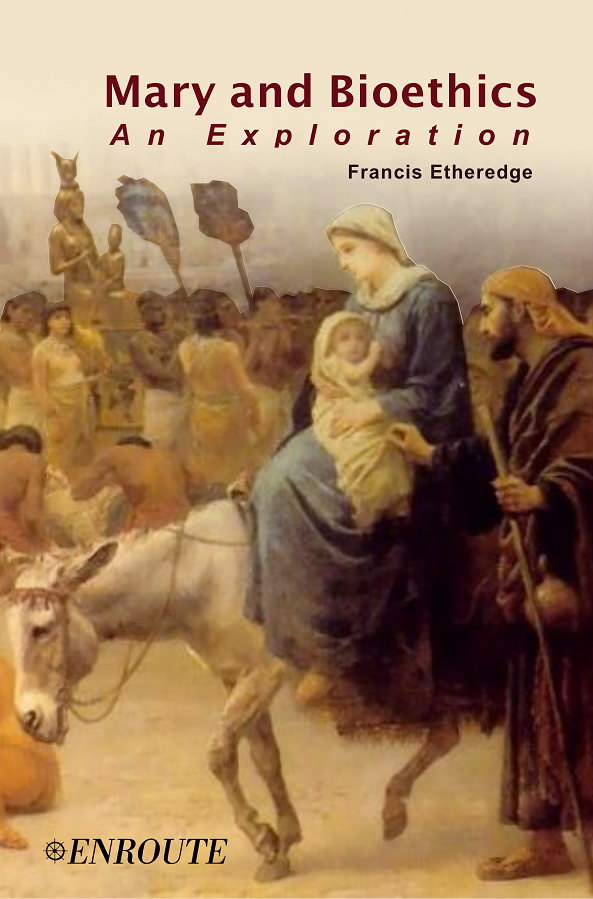
Mary and Bioethics
An Exploration
Whether it is the problem of pain, the messiness of our relationships or the confusion circulating about human identity, it is possible to think that we do not have anything to learn from the Virgin Mary, spouse of St. Joseph and Mother of the Lord, regarding our understanding of the human race; indeed, that Mary is somehow superficial to who we are as human beings and is a kind of devotional addition to her son Jesus Christ. However, considering the nature of woman opens upon a vision of the gift of human being as fundamentally ordered to relationship. The reality of men and women, neither exalted nor diminished, is discovered to be a gift-to-be-gratefully received; and, on reflection, this turns out to be a necessary redress of the many imbalances in the self-understanding of our times. In other words, reflecting on Mary, the Mother of the Lord, yields a foundational insight into the very moment of human conception, a clearer perception of human participation in the mystery of redemption and, at the same time, a fountain of insights concerning many of the bio-ethical problems of our time.
The book is woven through, from beginning to end, with a variety of contributions, a number of which contain the gems of faith-enriched-experience: the General Foreword is by Dr. Anthony Williams, with introductions to each of the seven chapters by Dr. Mary Anne Urlakis, Maria Maffucci, Laura Elm, Edmund Adamus, Dr. Michal Pruski, Dr. Moira McQueen and Leah Palmer, followed by an End Word by Bishop John Keenan of Paisley, Scotland.
Praise
“In Mary and Bioethics, Francis Etheredge offers us a concrete example of what John Paul II referred to at the end of his great encyclical on faith and reason: philosophari in Maria (to philosophize in Mary). Using a striking range of sources in his reflection, from St John of the Cross to radical feminist Shulamith Firestone, Etheredge prompts his reader to reflect on human nature, medicine, sin, suffering, and grace. The results are worth pondering. By meditation on the virtues and privileges of Mary, Etheredge points out new directions in bioethics, getting behind the problematic of disputed questions to foundational natural and supernatural truths. One notable instance is the reflection on the Immaculate Conception as a kind of icon of the gratitude which the creature owes to the Creator. In a time in which “existential ingratitude” (26) is becoming the norm (radically seen in the rejection of one’s own bodily form as male or female), Mary’s gratitude for what she received from the very first moment of her existence acquires a new significance. In this way, and in many others, Etheredge shows Mary to be an ‘antidote’ to our present spiritual distress.”
“This starting point for bioethical questions strikes me as refreshing, but not because it is new; to the contrary, it is original. … Francis Etheredge begins Mary and Bioethics with a concern that too many bioethical questions lack an adequate foundation and aim, instead, toward technical innovation (6)….Etheredge rightly laments, “Our times … are losing the wisdom of waiting and many bioethical problems are arising out of this impatience which has gone beyond being personal and become a kind of epidemic ….It is almost as there is a kind of maternity waiting to be recovered – not just the maternity of motherhood but the motherhood of waiting on God” (19). From this perspective, we can see that Mary as an exemplar provides us with a better foundation of embodied human being than does any merely technically innovative model. Precisely, Marian piety calls our attention to the holy family, which reminds us of our own families as the origin of our individual and communal lives. The family is the place where suffering is lived rather than merely solved. This starting point for bioethical questions strikes me as refreshing, but not because it is new; to the contrary, it is original’.”
“This is a book I likely would not have encountered had the author not sent it to me–I do not have a deep Marian piety; further, I am neither Catholic, nor am I a bioethicist. I am blessed by the encounter! This book is different in several ways. It mixes the personal with the academic in an engaging style. It integrates subjects–biblical studies, Catholic moral and fundamental theology, and bioethics–usually kept strictly siloed (at least in my world). It strives to speak to both head and heart on an issue of fundamental importance and sensitivity, avoiding both sterility and sentimentalism. Believers comfortable with the language of Scripture and Tradition on the subject of Life will find their views ably defended even as they are invited to look at the science. Believers who tend toward natural law arguments (here’s where I fall), will be reminded of the depth of spiritual resources at their disposal. I warmly recommend this text to a wide readership and hope it does not remain exclusively within Catholic pro-life circles.”
“‘When Francis gave me his book Mary and Bioethics, I can’t say that I felt terribly enthusiastic about reading it. I felt it would be far too theological and difficult for me to understand. So it was with some trepidation that I did so. However, I found it a sensitive and very interesting read. In fact, I read it twice to fully comprehend all the insights of Francis’ study of the subject. I certainly found a deeper understanding of the amazing role Mary has played, and is still playing, in the life of the Church and the world. Through her, the Church expands its knowledge and understanding of Salvation History. Mary is a mother for Jesus and for us. Francis shows a well-informed understanding of how Mary brings us to Jesus. The science of bioethics is very well described, giving many new insights and showing how some treatments are ethical and others are not. True Christian Marriage is discussed and explained in a very beautiful way, and the whole book is interspersed with some very moving testimonies of peoples’ lives. It is a very readable and interesting book.”
“With depth and clarity Francis Etheredge in Mary and Bioethics: An Exploration shows how theological appreciation of Mary’s role in the Incarnation can illumine our understanding of many issues in bioethics. The suffering that leads to such technological solutions is not evaded. Introductory segments to each chapter also show its relevance to life. An authoritative and perceptive work—highly recommended.
“Mary and Bioethics is a unique and timely tome. In a world where we’ve forgotten what it means to be human, what it means to be a man-father or woman-mother, a world grown cold that treats human life as a commodity, a ‘throwaway’ culture, Mary helps us rediscover our dignity! Mary herself is a Catechism. If we can learn to read her–‘our tainted nature’s solitary boast’–we will not only grow in self-understanding, but feel the warmth of her love for us.”
“From a secular perspective, bioethics cannot be more disconnected from Mary; however, from that of the Catholic Christian, Mary is none other than the Mother of all the Living. In Mary and Bioethics, Francis Etheredge provides a well-researched and referenced interlace between Mariology and bioethics. Etheredge shows that bioethics lacking a Marian view, accepting life as a divine gift, is fundamentally ill-equipped to respond to human suffering genuinely and compassionately.”
“In Mary and Bioethics, Francis Etheredge has assembled the leading global Mariologists whose contributions sear the soul with inspired insights into the life, heart and soul of our mother Mary that one will remember forever and which wonderfully complement his work.”
“This insightful book urges a novel anthropological approach to the complex issues surrounding marriage, the family, bioethics, and the frantic search for fulfilment that characterizes many societies today. It is in Mary, who alone fully corresponded to God’s design for humanity, and was ever open to grace, that we find the best response to those who would seek their self-realization in a radical affirmation of personal liberty. In place of an illusory freedom that reduces us to biologically determined entities, Mary offers us a vision of life, of the human person, as gift, a gift from God to which we may respond in kind, transforming our perspective as we face the multiple challenges of this topsy-turvy world. In place of manufactured solutions to the human condition – whether gender reassignment, abortion, genetic manipulation, in-vitro fertilization – Mary’s radical choice of God, even in the face of unimaginable challenges, shows us how we can transcend our sense of helplessness by recognizing that it is precisely in our limitedness as creatures that we can discover our infinite potential as children of God.”
“Francis Etheredge masterfully demonstrates that without recourse to God, bioethics is ultimately without meaning. Worse still, it is destined to endorse a culture of death in the face of human suffering. How much we have to learn about human life as a Divine gift especially from Mary, Seat of Wisdom and Mediatrix of all Graces!”
“Francis Etheredge has inspired us to look to the Blessed Mother—particularly in and through her Immaculate Conception—as reason and hope for our greater understanding of ensoulment. Contributing to the understanding of when a human being—body and soul—comes to be is critically important when it comes to ethical implications of experimentations and procedures in the fields of biology, biotechnology, infertility, etc. as they relate to the dignity of the human person and the preservation and aid of human life. Mary was God’s choice to bring about the Incarnation of Christ. Etheredge proposes that we have far more to glean and appreciate from this “Gate of Heaven”, as she is called, in our quest for identifying the beginnings of our personhood, accepting the gifts and calling of our gender, and understanding the significance and relevance of marriage between one man and one woman and its corresponding correlation to Christ’s spousal relationship to his Church.”
“An excellent exploration of how scripture can still link to questions in today’s Bioethics. The author does not shy away from any difficult topics and provides a clear answer to a wide range of cutting edge questions.”
About the Author
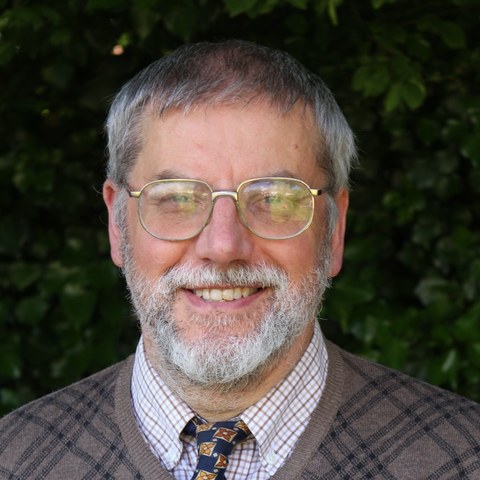
Mr. Francis Etheredge is married with eight children, plus three in heaven.
Francis is currently a freelance writer and speaker and his “Posts” on LinkedIn can be viewed here. Poetry; short articles; autobiographical blog; excerpts from books; and “Philosophize: A Ten Minute Write.”
For a list of all of Francis’ books published by En Route Books and Media, click here.
See Francis’ other books, too, entitled Scripture: A Unique Word, From Truth and truth: Volume I-Faithful Reason, From Truth and truth: Volume II: Faith and Reason in Dialogue, From Truth and truth: Volume III: Faith is Married Reason.
He has earned a BA Div (Hons), MA in Catholic Theology, PGC in Biblical Studies, PGC in Higher Education, and an MA in Marriage and Family (Distinction).
Enjoy these additional articles by Francis Etheredge:
Reviews
- Pia Matthews, Faith. (May 1, 2021.) Read the review here.
- Fr. Aidan Nichols, Homiletic and Pastoral Review. (March 12, 2021.) Read the review here.
- Dr. Pia Matthews, Senior Lecturer, St Mary’s University Twickenham, England, “Profiles in Catholicism”. (January 11, 2021.) Read the review here.
- Dr. Eileen Quinn Knight, “Profiles in Catholicism”. (October 5, 2020) Read the review here.
Watch and Listen
Table of Contents
Acknowledgements
General Foreword by Dr. Anthony Williams
Prologue: Pain in the “Biological Family”; “Soma: a Holiday from Reality”; and “Mary and Bioethics”
General Introductions to Each Chapter of the Book: Chapters One to Seven
Foreword to Chapter 1: Dr. Mary Anne Urlakis
Chapter One: The Holy Family: Celibacy and Marriage: A Reflection on the “Passage” from the Jewish Rite of Marriage to the Christian Sacrament of Marriage:
General Introduction: Background: Continuity between the Old and the New Covenant; A new Appreciation of the Transformation of Marriage; Background: Scripture and Marriage
The Book of Tobit (I); Christ and the Covenant (II); The Marriage of Mary and Joseph (III); Christ and His vocation to Celibacy (IV): Cornelius and his family (V); Conclusion.
Foreword to Chapter 2: Maria McFadden Maffucci
Chapter Two: Part I of a Marian Triptych: Mary is the Choice of God:
My interest in whether or not there needs to be a new Dogmatic Statement on the Mystery of Mary (I); Mary ‘Gate of Heaven’ (II); Sharers in the Suffering of Christ (III); Some Objections to this Point of View (IV); and Conclusion (V).
Foreword to Chapter 3: Laura Elm
Chapter Three: Part II of a Marian Triptych: Our Hope in Mary:
Hope in the Reality of the Holy Family (I); The Definition of Hope and the Coming of Christ (II); How many Hopes Appear to us as Impossible?! (III); How Does Mary Help us to Hope? (IV); Two Objections to our Hope in Mary (V); Conclusion.
Foreword to Chapter 4: Edmund Adamus
Chapter Four: Part III of a Marian Triptych: Mary and Prayer:
The Emergence of Mary (I); Mary and the Prayer of the Church (II); Marian Prayer and the Covenant: The Conversation of Conversion (III)
Foreword to Chapter 5: Dr. Michal Pruski
Chapter Five: The First Instant of Mary’s Ensoulment:
Introduction: Two Possible Meanings of the One Reality of Human Conception; The Dogma of the Immaculate Conception: Two Instants or One Moment? (I); The Help of the Doctrine of Original Sin (II); A Discrepancy Between the Implied First Instant of Fertilization in the Dogma of the Immaculate Conception and the Definition of Conception in the English Translation of Donum Vitae (III); Conclusion: The Need for a More Precise Definition of Human Conception in the Documents of the Church
Foreword to Chapter 6: Dr. Moira McQueen
Chapter Six: Mary and Bioethics:
Introduction: Being-in-Relationship; Man, male and female, Christ and Mary (I); Mary and Bioethics (II); Mary and Gender Ideology (III); Marriage and Parenting: A Dynamic Conclusion
Foreword to Chapter 7: Leah Palmer
Chapter Seven: Love, Scripture, Suffering and Bioethical Questions:
The command to “Be fruitful and multiply” and the Cross of Infertility (I); The Biblical Account of the Suffering of Infertility (II); and, finally, Love and Bioethics (III)
Epilogue: The manufacture of children and the reality of relationship; Biblical prophecy and the Church’s criticism of fathers; Is there a way back to the future of marriage and family life?; Reasonable and graced humility; The radical originality of God
An End Word: A New Beginning – by Bishop John Keenan of Paisley, Scotland
Author Articles
“Conception: A Contradiction?” by Francis Etheredge, Homiletics and Pastoral Review (December 11, 2020), available here.