Prices as listed by En Route.
The retailer’s price may differ.
Bookstores, parishes, and schools:
Order direct at a discount.
- Subject
- Faith and Morals
- Reading lists
- The Church, Tradition, and Vatican II
- Formats
- Paperback, Kindle
- Publisher
- En Route Books and Media
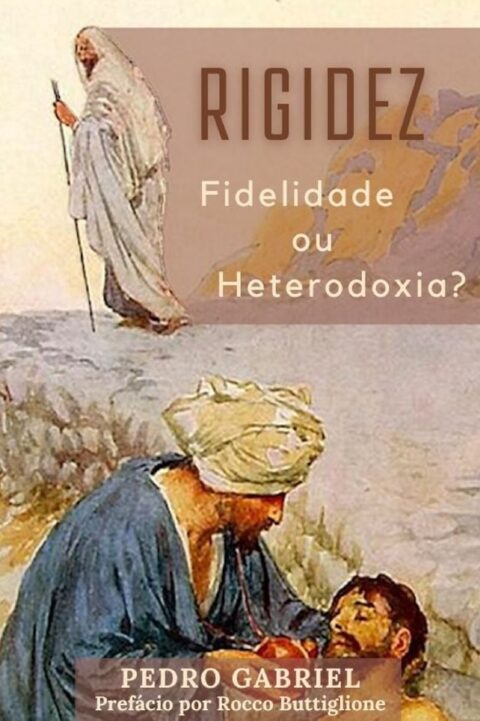
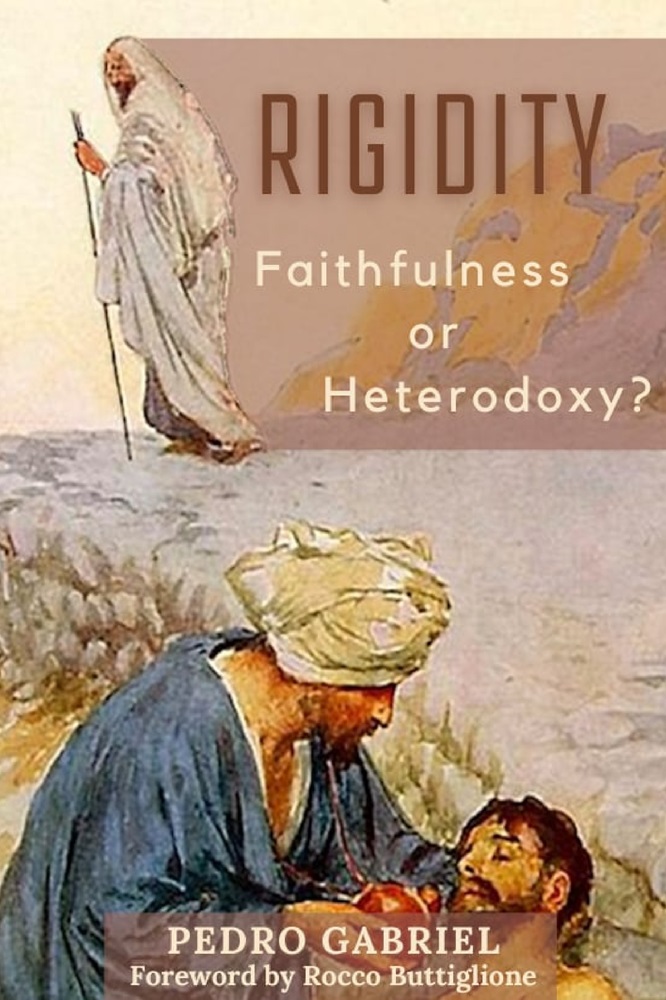
Rigidity
Faithfulness or Heterodoxy?
“Why is Pope Francis always criticizing faithful Catholics?” is an oft-repeated question whenever the Holy Father makes one of his usual invectives against religious rigidity. Francis has indeed made such denunciations a hallmark of his pontificate. But what does he mean by “rigidity”? Is he truly attacking faithful Catholics? Is he promoting moral and religious laxity?
In this book, Pedro Gabriel aims at clarifying Pope Francis’ teachings on rigidity, by relating them with certain keywords emerging repeatedly in his interventions. He also seeks to falsify the idea that a Catholic is faithful by being rigid, by comprehensively exploring precedents in Church history where the rigid course of action did not always prevent the faithful from falling into heterodoxy. Finally, Gabriel explains how eschewing rigidity does not necessarily entail the opposite extreme of laxism.
Praise
“Pedro Gabriel gives us a wonderful book on an ‘outgoing Church,’ a plea for the education of a Christian personality that is flexible but with a strong backbone. He discovers in the faith not an obstacle to the fullness of human life but a path—not only to eternal life but also to a life one hundred times more human here on earth.”
“Pedro Gabriel has written a truly brilliant book, not only for its readable style but above all for its pertinent content. Rigidity: Faithfulness or Heterodoxy? is not a mere exercise in Catholic apologetics, but a true educational path for those of us who need to rediscover the reasons for living to the full ‘the glorious freedom of the Children of God’ (Rom 8:21). Pedro Gabriel’s new book undoubtedly helps us to detoxify the Christian life from the frequent laxist and rigorist temptations that are so popular and so misleading in today’s world. Nothing could be more opportune to live the faith with maturity and balance following the teachings of the Gospel in communion with the Successor of Peter.”
“Dr. Pedro Gabriel, acclaimed for his award-winning books The Orthodoxy of Amoris Laetitia and Heresy Disguised as Tradition, is a foremost expert on the style and teaching of Pope Francis. In his latest work, Rigidity: Faithfulness or Heterodoxy, he builds on his previous research by expanding upon what the Pope views as a fundamental and ironic misconception of the meaning of Tradition among self-proclaimed traditionalists. He does this by providing an analysis of the attitudes that flow from it, best understood as rigidity and indietrism (backwardness). Dr. Gabriel, in his winsome way, challenges readers to reassess whether they have truly grasped the meaning of St. Paul’s exhortation to ‘stand firm and hold to the traditions which you were taught’ (2 Thess. 2:15 RSVCE), and he urges them to fairly reflect on Pope Francis’ concerns without resorting to defensiveness or kneejerk reactions. Drawing on the Church’s self-understanding of fidelity to Tradition, perhaps best expressed in Catechism of the Catholic Church paragraph 100 and Dei Verbum paragraph 8, Dr. Gabriel offers a more secure, comprehensive, and practical approach to navigating the apparent tensions between the Magisterium and Divine Revelation than undoubtedly most traditionalists are familiar with. Through a meticulous examination of historical heresies, the virtue ethics tradition of Aristotle and Aquinas, and the teachings of popes, both pre- and post-conciliar, Dr. Gabriel skillfully navigates the complexities of rigidity, rigorism, and the scrupulosity that results, to lead readers to a greater freedom in Christ, for ‘the Lord is the Spirit, and where the Spirit of the Lord is, there is freedom.’ (2 Cor. 3:17).”
“Many conservative and traditional Catholics take offense at Pope Francis’s warnings about rigidity. They believe he is associating faithfulness with rigidity. Pedro Gabriel shows that this is a complete misunderstanding of the Holy Father’s concerns. Pope Francis is actually upholding the authentic Catholic tradition, which seeks the golden mean between laxism and rigidity. In this much-needed work, Gabriel provides an historical survey of various groups in Catholic history that have criticized the immoral and lax Church while claiming to be the true, pure, and authentic followers of the Gospel. Throughout her history, the Catholic Church has resisted various rigorist groups such as the Judaizers, the Novatianists, the Donatists, the Spiritualists, and the Jansenists. Gabriel does not claim that the rigid Catholics of today can be identified precisely with any of these heretical movements. He does, however, note certain similarities, especially in the common tendency to believe that the institutional Church is corrupt or misguided and one’s own movement represents the true faith. Gabriel not only explores the history of rigorist movements; he also provides an authentic understanding of what Pope Francis means by present forms of Pelagianism and Gnosticism. In my opinion, Pedro Gabriel understands Pope Francis far better than the papal critics. He shows the Holy Father to be a faithful son of the Church, steeped in the Catholic tradition of Augustine, Aquinas, and Liguori—a tradition marked by balance, mercy, and discernment.”
About the Author
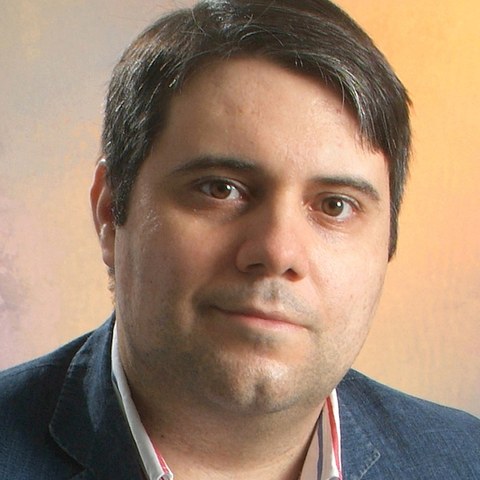
Pedro Gabriel is the author of The Orthodoxy of Amoris Laetitia and one of the co-founders of the apologetics website “Where Peter Is.” Currently, he is taking classes of moral theology at the Pontifical University of the Holy Cross. He is also a medical oncologist, an Internet journalist, and a published writer of Catholic novels.