Prices as listed by En Route.
The retailer’s price may differ.
Buying outside the United States
- Buy, IndiaPothi
Bookstores, parishes, and schools:
Order direct at a discount.
- Subject
- Philosophy
- Formats
- Paperback, Kindle
- Publisher
- En Route Books and Media
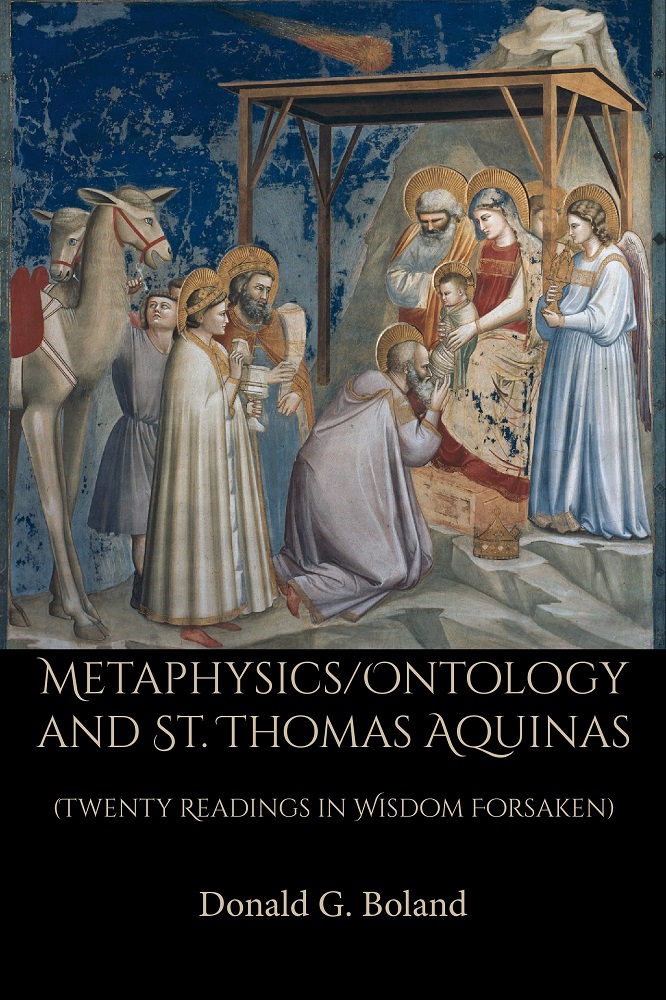
Metaphysics/Ontology and St. Thomas Aquinas
With this book the author moves from what Aristotle and Aquinas called the order of practical studies to the theoretical. At their highest levels it is from the ethical to the metaphysical. To the modern mind, if the consideration of morality or ethics is hardly relevant in the study of science the consideration of ontology or metaphysics is even less so. Indeed, any principles or conclusions put would almost universally be regarded as quite unscientific.
What the author wishes to show in this book is that this modern mental position could not be further from the truth. A close study of Aristotle shows, and Aquinas clearly demonstrates, that all human science and knowledge depends upon what we can know from Metaphysics. The core of this study, which is given the name “Ontology”, from the Greek to on (Latin ens), rather loosely rendered in English as “being”, is all contained virtually in St. Thomas’s pregnant sentence, id quod primo cadit in intellectu est ens (“that which the human mind is first aware of is being”).
Leave this out and the bottom falls out of all our other knowledge. This evacuation, as Aristotle shows, cannot really be done. But, many philosophers and scientists of the modern era, like Heraclitus of old, pose as if they rejected the certainties of Metaphysics., to the detriment of all science. Hopefully, our readers will see the need for the return of Wisdom, which Metaphysics is, to its position of eminence in the study of science.
Praise
“The fundamental place of Metaphysics (natural wisdom) in the range of human reason and in the full notion of science (as clearly set out by both St Thomas Aquinas and Aristotle) is wonderfully exposed in this book. For its author, Dr Don Boland, it is clearly a labor of love. Not wanting to embarrass him, I shall nevertheless, as a fitting endorsement, quote from the book itself:
‘The object of our series of books is simply to make up if in a small way for the neglect of the study of Aquinas in modern day education, especially as this neglect has spread to Catholic educational institutions, even sponsored by the hierarchy of the various countries of the ‘West’, among which are seminaries … This is despite the constant and clear insistence of the popes in document after document upon education up to university level, to pay special attention to Aquinas.
Somehow or other, even the bishops have been led or misled by those imbued with a secularist program, received no doubt in their own education/indoctrination, to distract the study of the youth and young adults into paths that end up alienating many not just from their Church but also from their own Catholic families. Parents who have been deeply concerned to give their children a good Catholic education are bewildered when the very institutions they have trusted seem to produce the opposite effect. No one should underestimate the power of a secularist culture in which they are required to live.’
If this book is taken as seriously as it should be, it will do much good in restoring the rightful foundations of truly Catholic education.”
About the Author
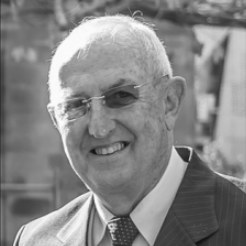
Donald G Boland Ll. B. Ph. D. is a founding member of the Centre for Catholic Studies Inc. in Sydney Australia and is one of its former Presidents. He practiced for a number of years as a lawyer having a degree in law from the University of Sydney. Over much the same time, having obtained a doctorate in philosophy from the University of St. Thomas in Rome, he has taught philosophy and law in both Catholic and secular educational institutions, such as the University of Technology, Sydney, the University of Newcastle, the Aquinas Academy, the Centre for Thomistic Studies Inc., now operating under the name of the Centre for Catholic Studies Inc., and various Catholic seminaries, such as those of the Marists and the Vincentians. His doctoral thesis was on the concepts of utility and value in economics as found in the works of Aristotle and St. Thomas Aquinas.